Every agent session, on the record.
Brokk Observe is an audit trail for AI coding agents. It records every Claude Code and OpenAI Codex session in your organization, reviews each one for security problems, and traces bugs back to the session that introduced them.
Works with Claude Code and OpenAI Codex, as a plugin. Secrets are redacted before anything is stored.
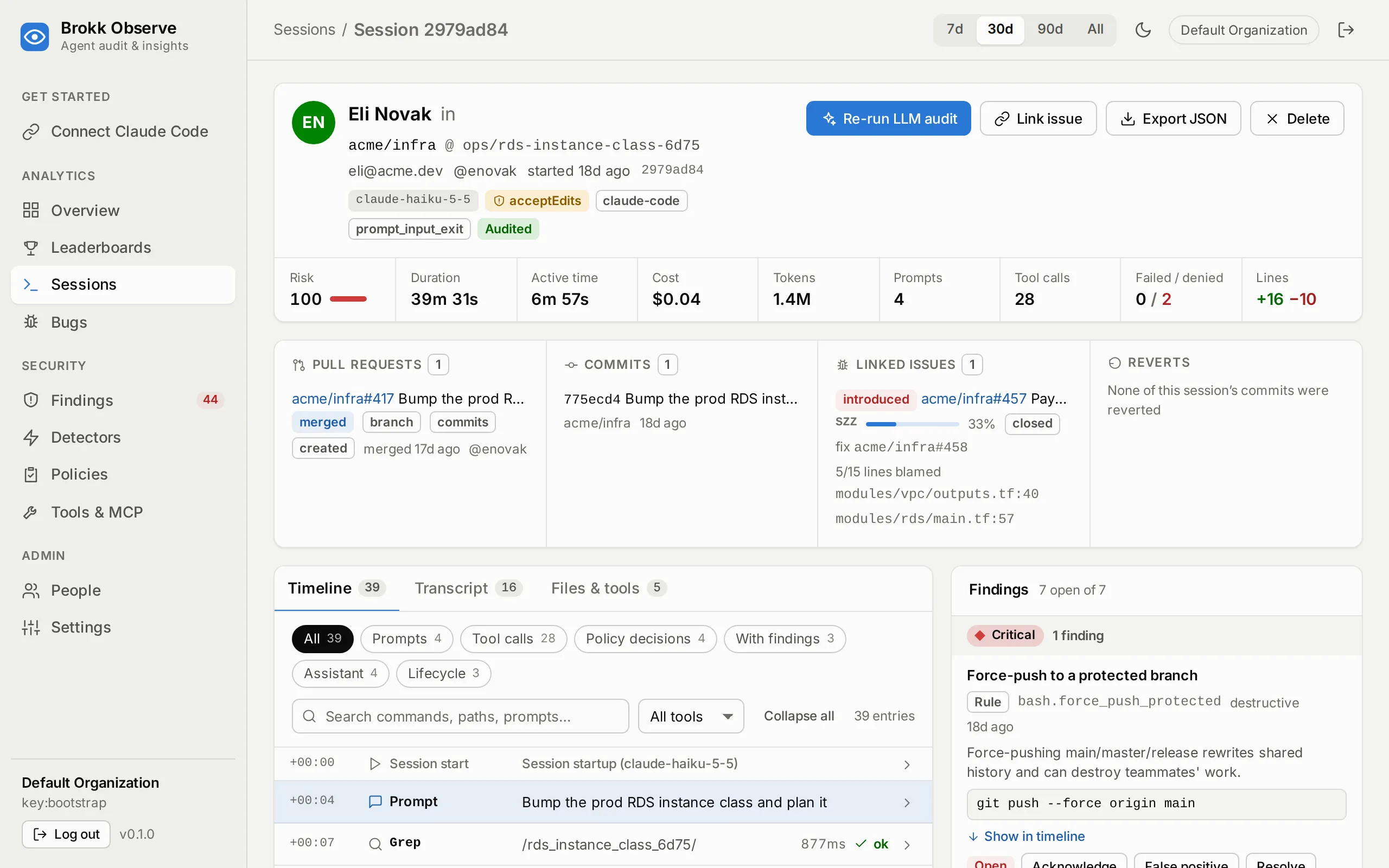
acme/infra- PromptBump the prod RDS instance class and plan it
- Read
envs/prod/main.tfok - Edit
modules/vpc/outputs.tfok - Bash
terraform validateok - Bash
git push --force origin maindenied
A policy denied the call before it ran. The rule bash.force_push_protected filed it as a finding, pinned to the event that tried it.
What you get
One dashboard for what your agents did, what went wrong, and what it cost you later.
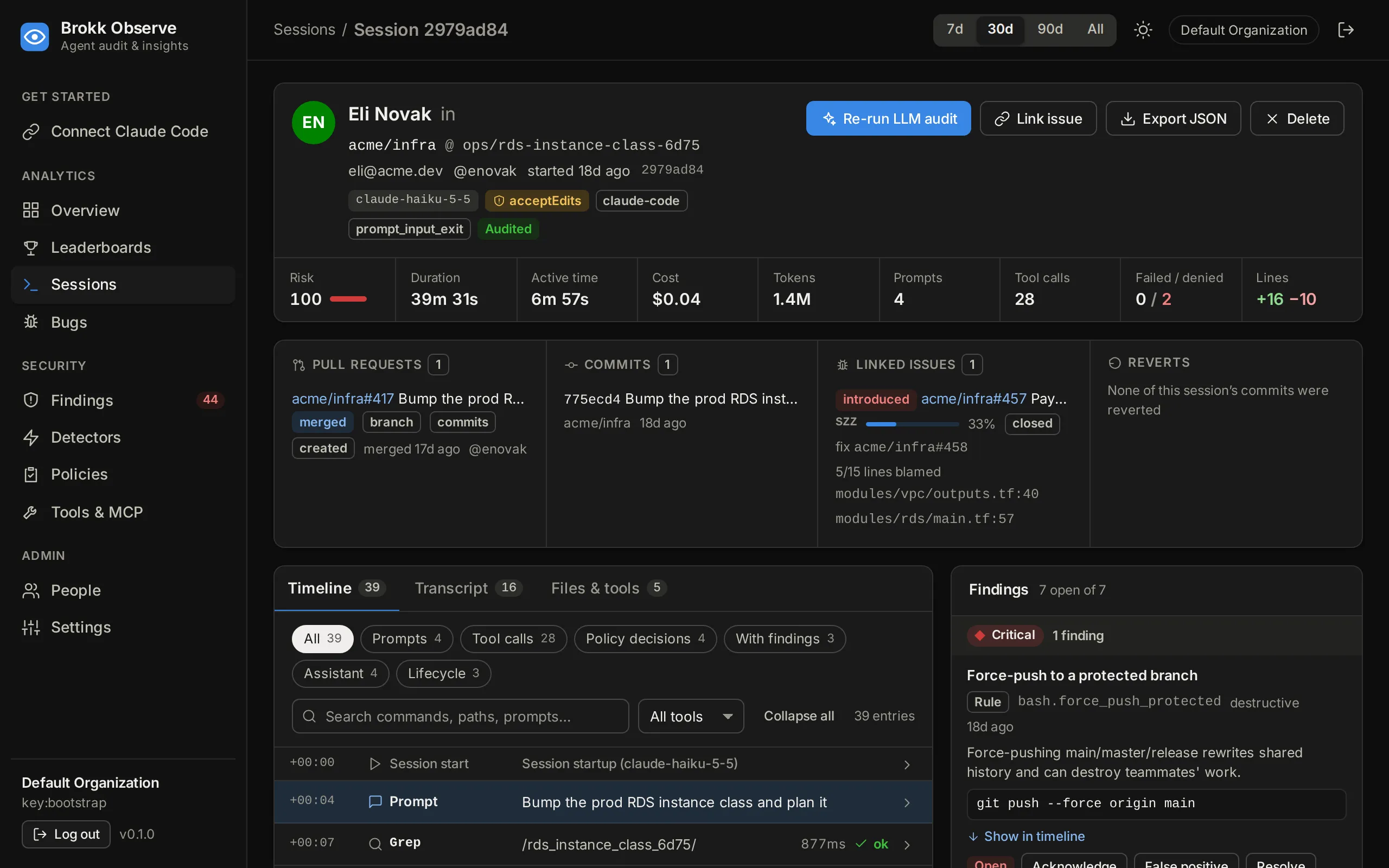
Every session, replayable
Every prompt, tool call, permission decision, subagent, commit and pull request, in order and with its diffs. Secrets are redacted before anything is stored.
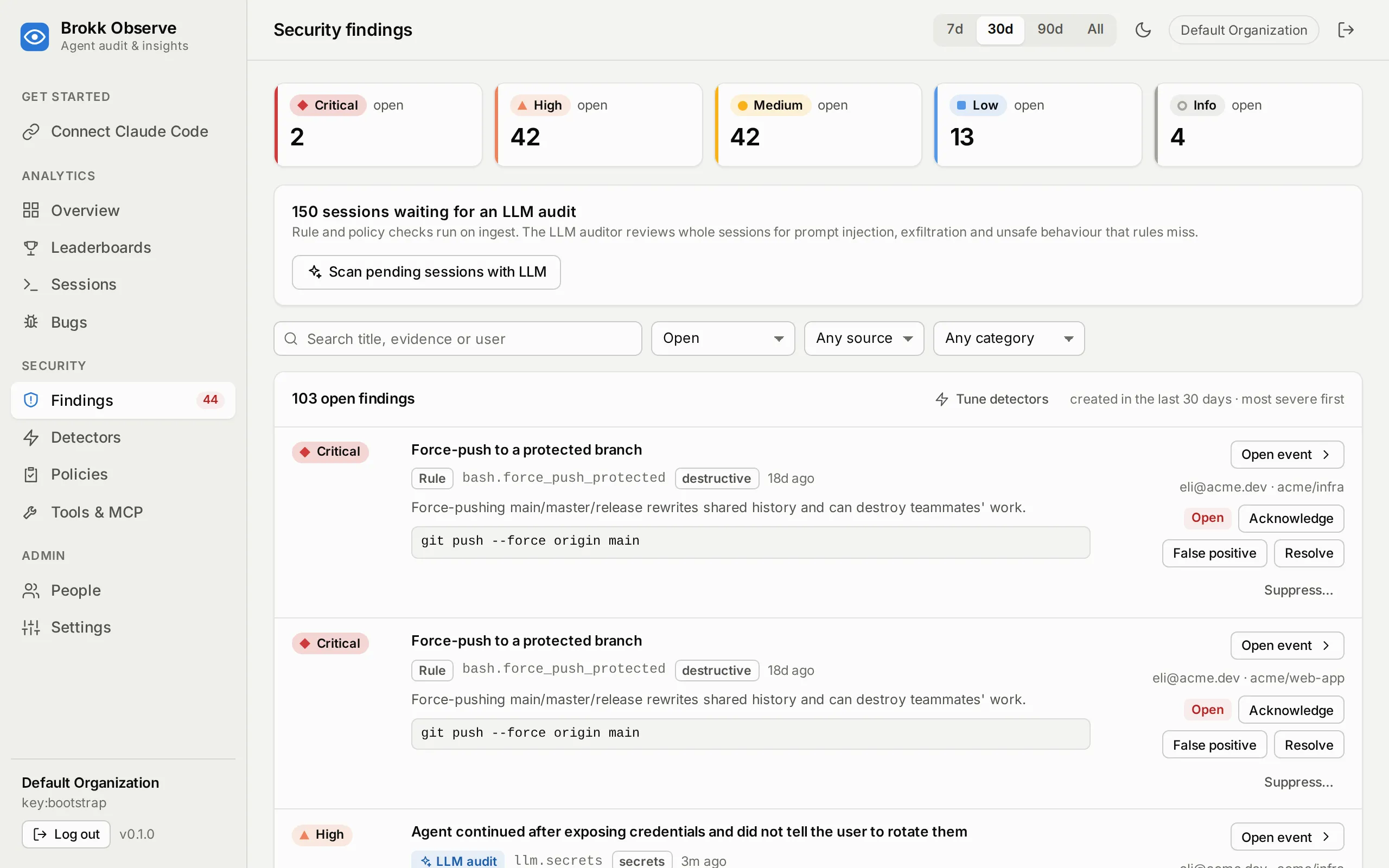
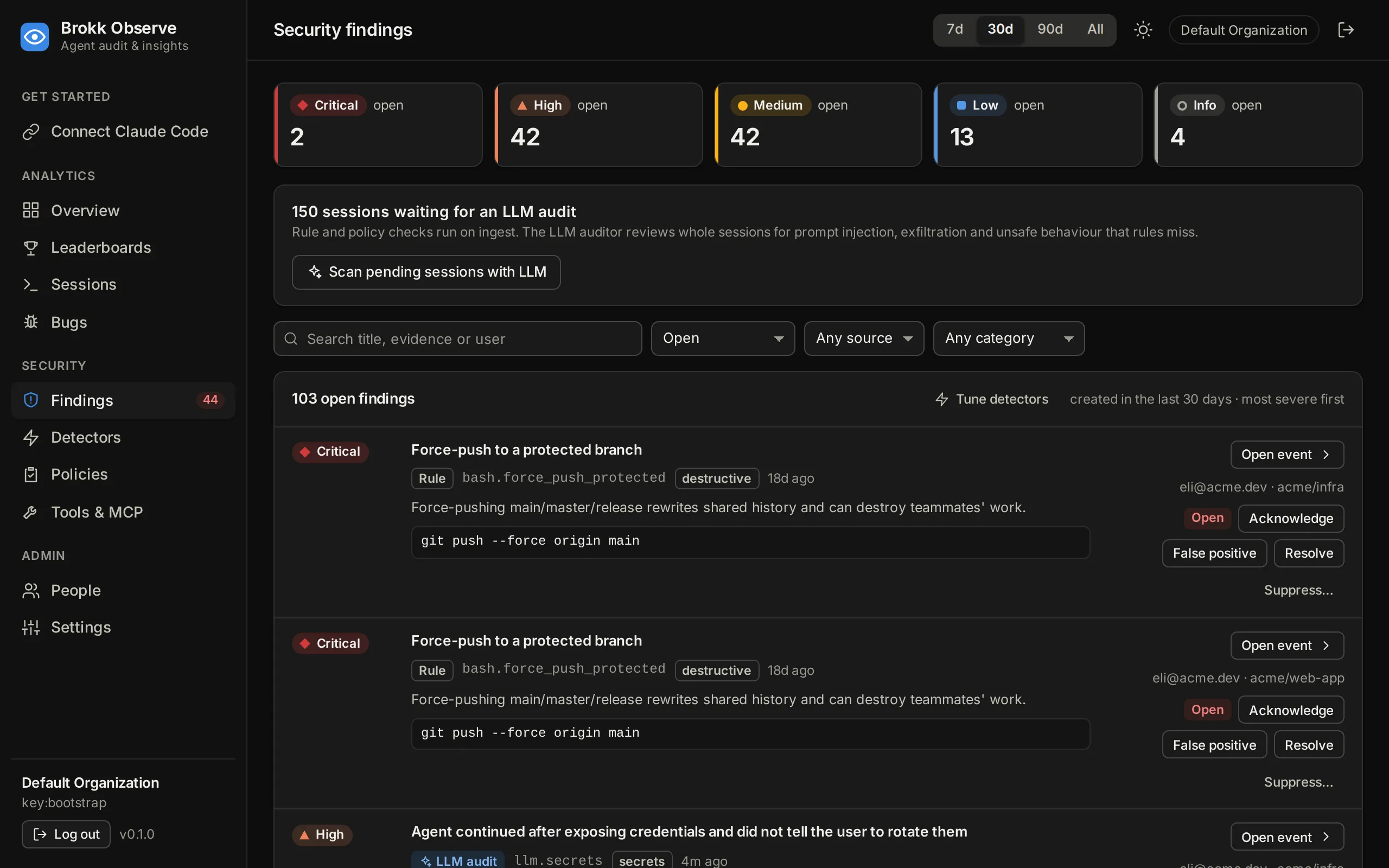
Rules for the known problems, an LLM review for the rest
About 35 detectors catch secrets reaching the model, curl | sh, force-pushes and prompt injection in tool output. A Claude-powered review then reads the whole session for what rules cannot see.
Stop a tool call before it runs
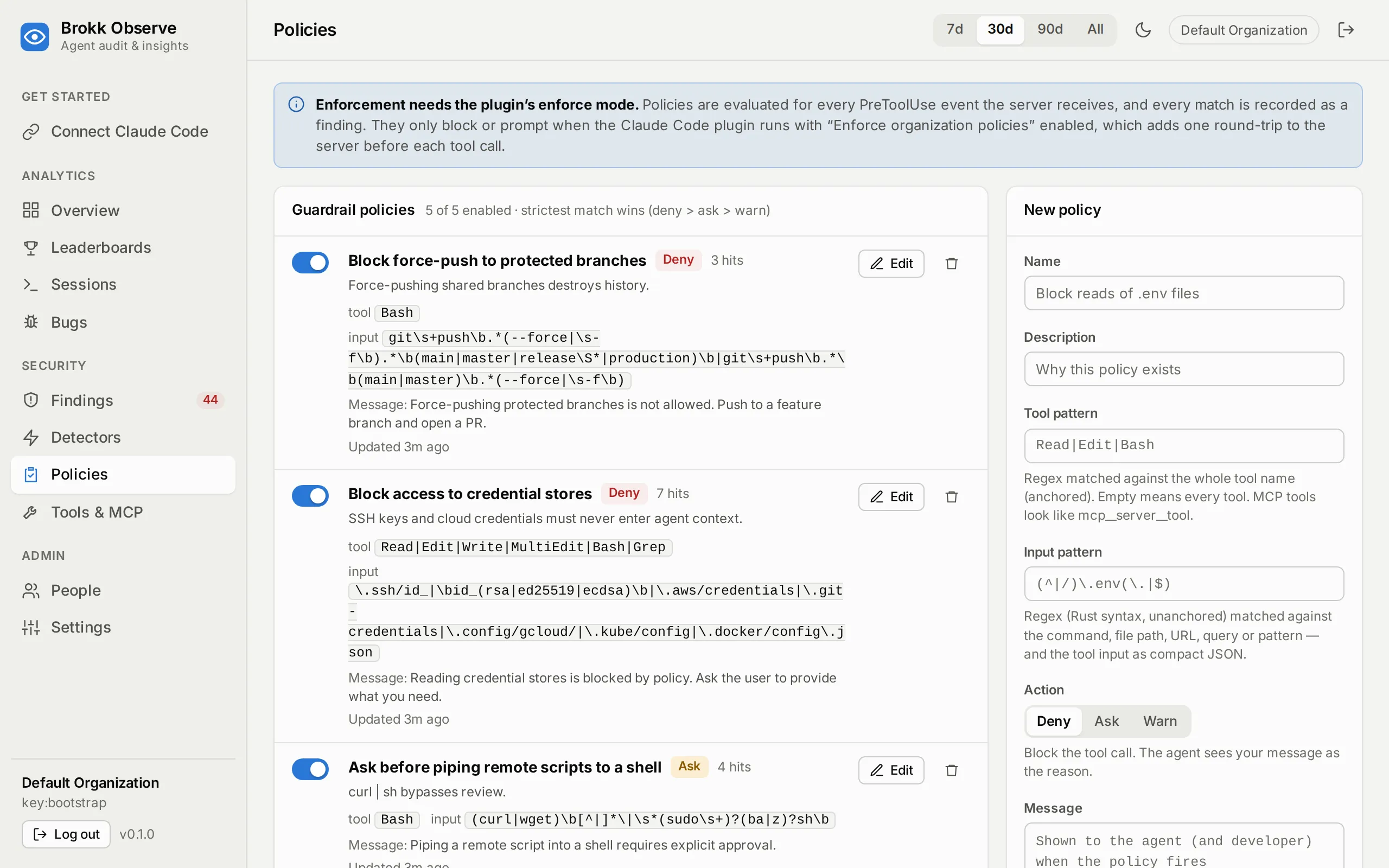
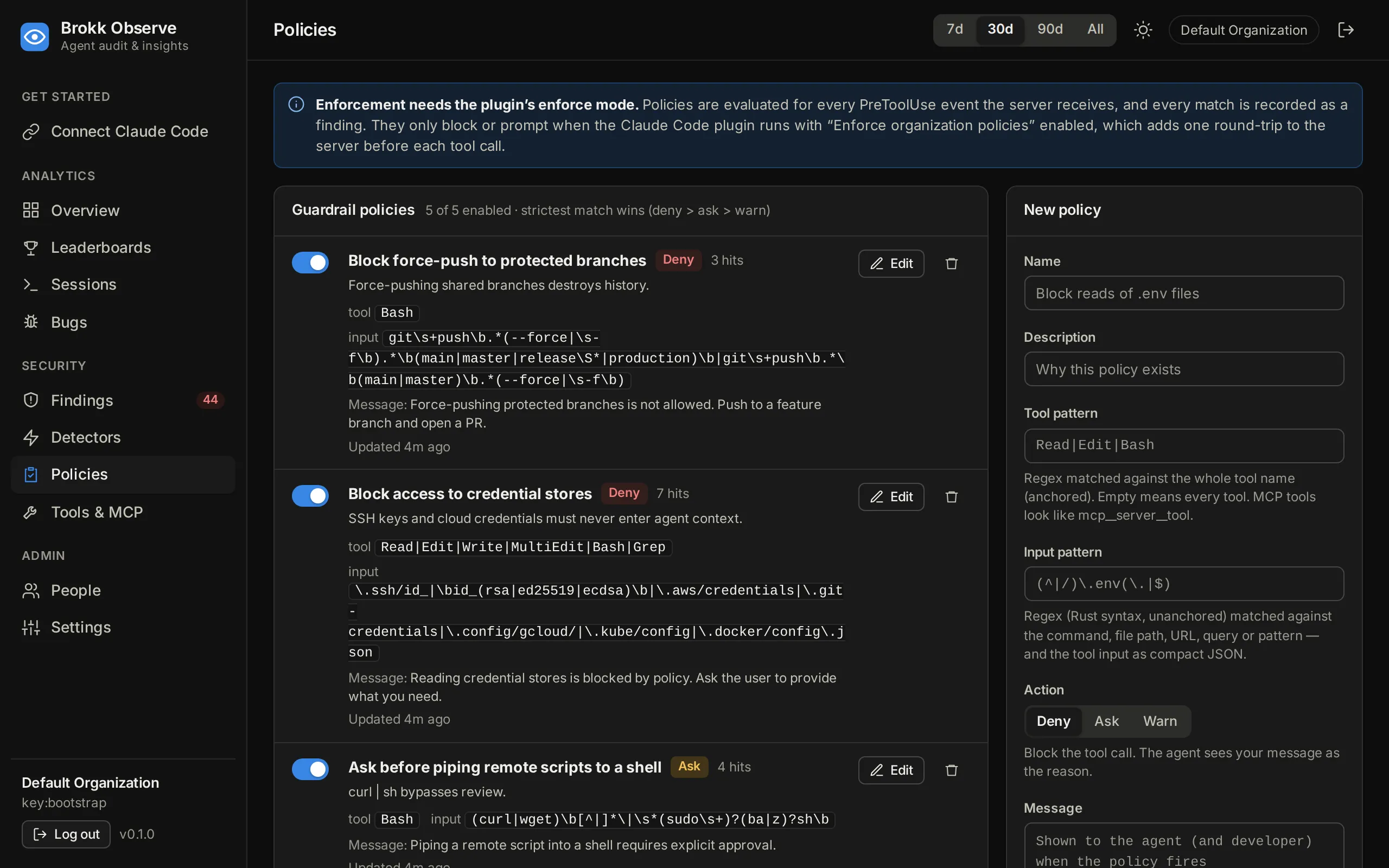
Deny, ask or warn rules, set centrally and enforced by the plugin before the call happens. Try a rule against a command before you switch it on.
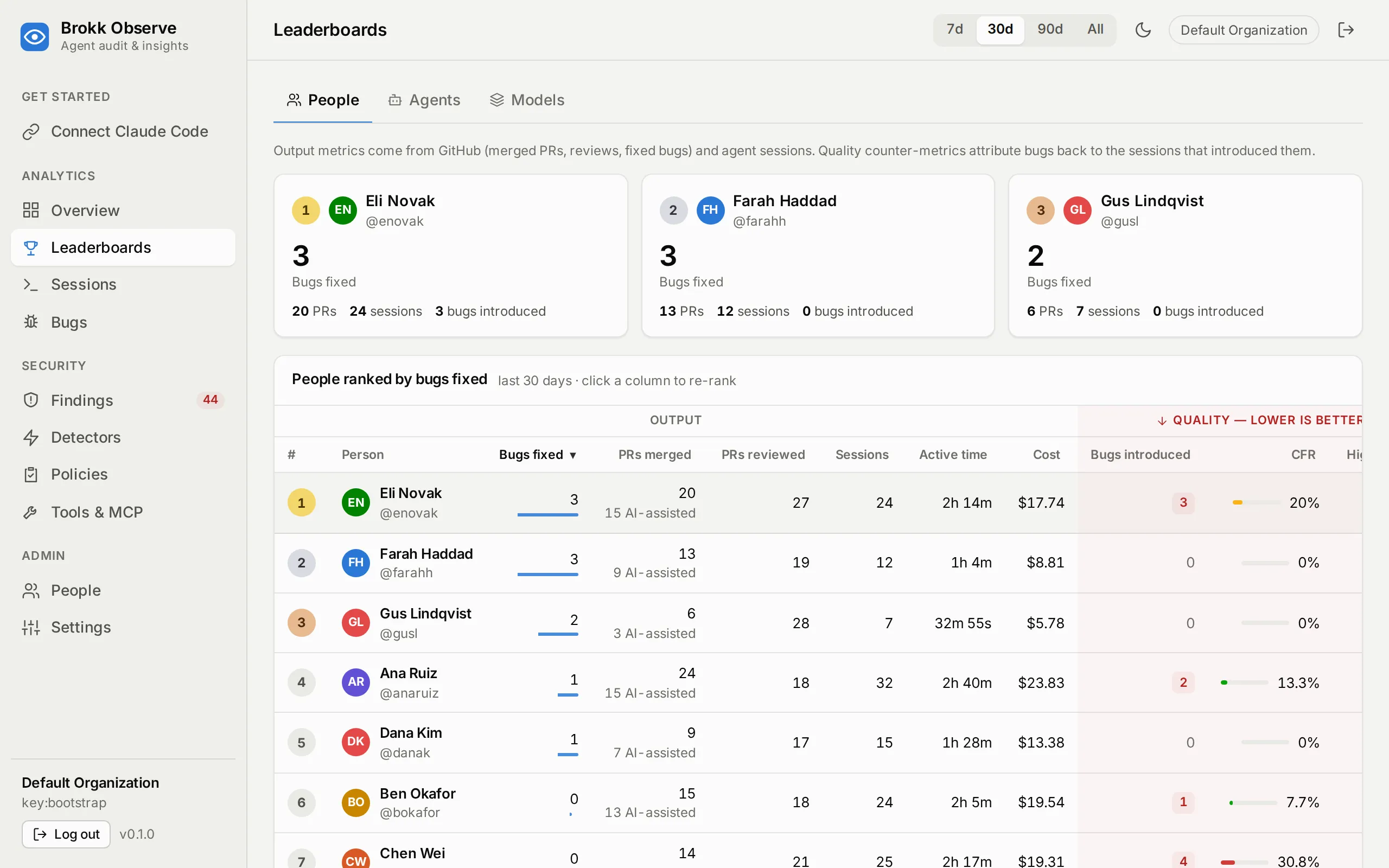
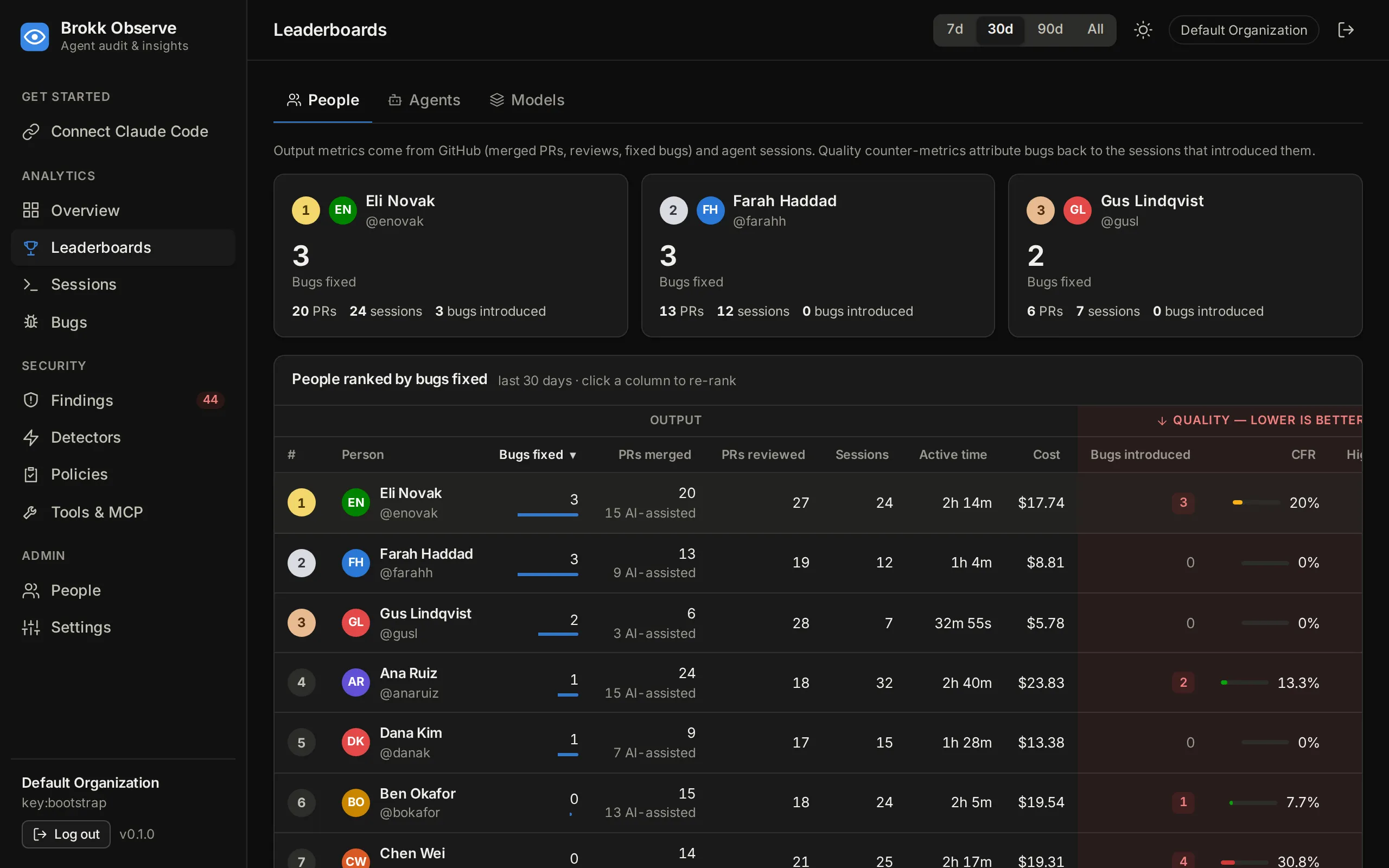
Output, with the downside in the next column
People, agents and models ranked on bugs fixed and pull requests merged and reviewed. Bugs introduced and change-failure rate sit right beside them.
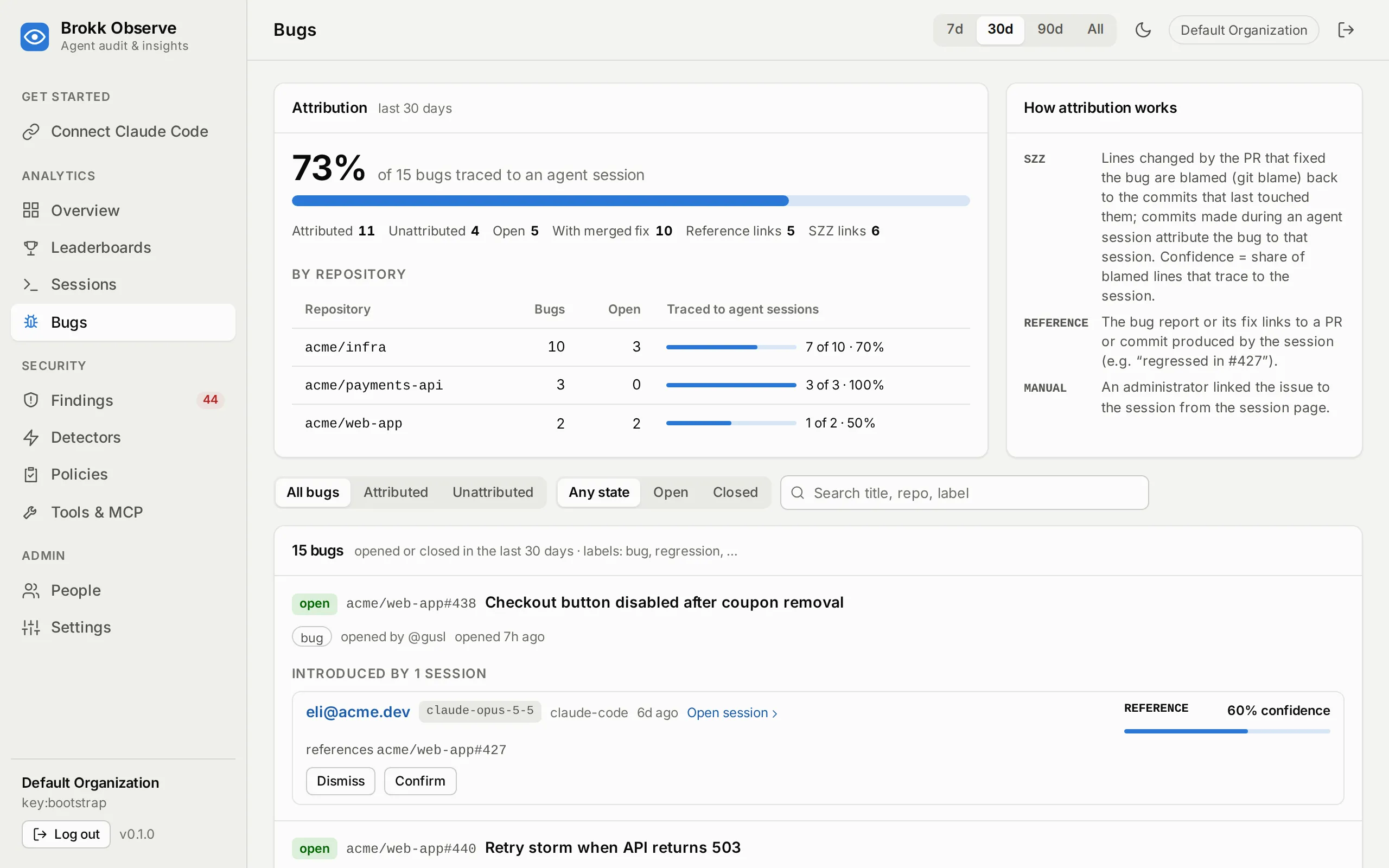
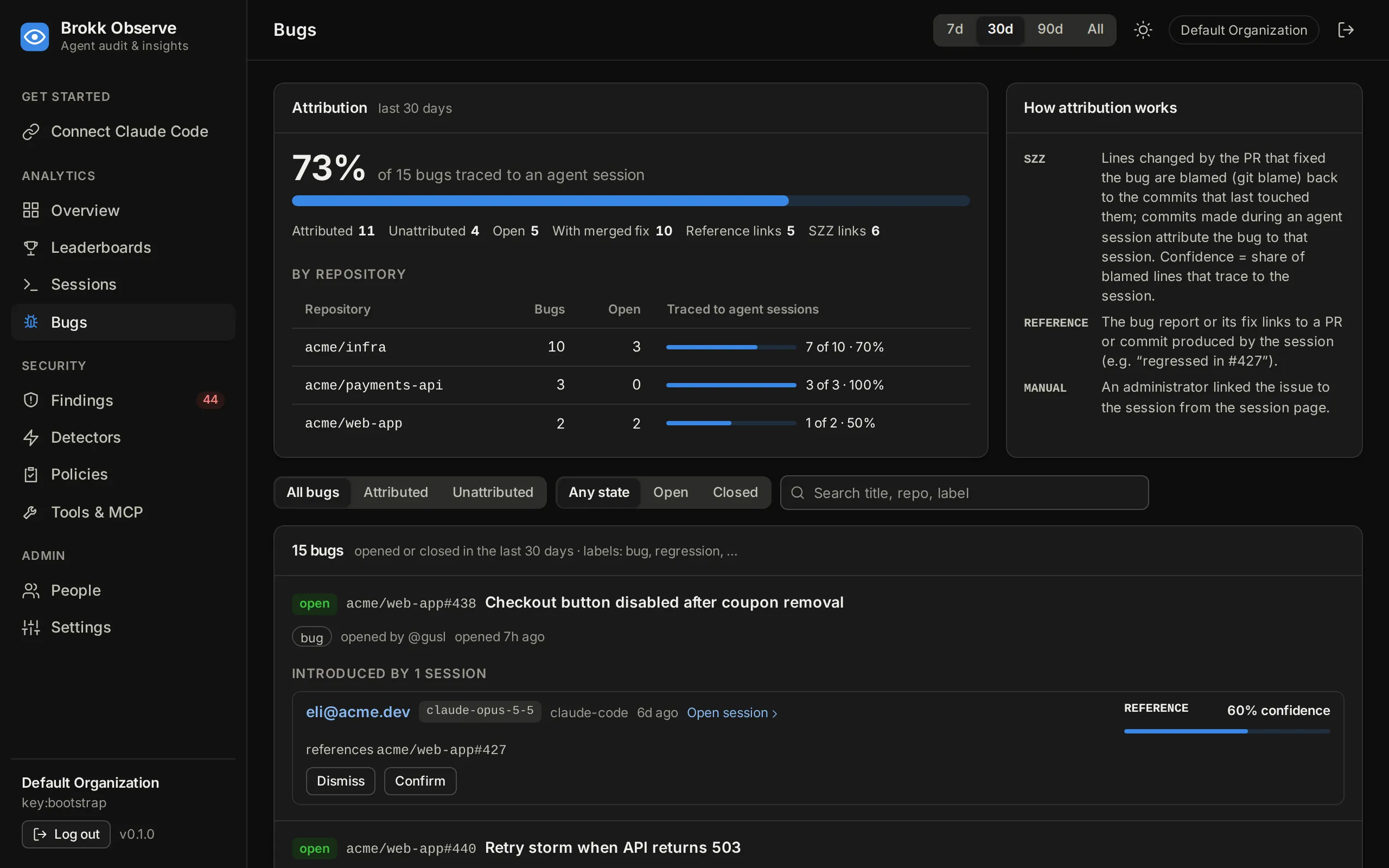
Bugs traced to the session that introduced them
When a bug is fixed, Observe blames the fix back to the commit that introduced it, and to the session that wrote that commit. You get a change-failure rate for AI-written code that you can check line by line.
How it works
-
Install the plugin
Two commands in Claude Code or Codex, or roll it out to the whole organization with managed settings so it cannot be switched off.
/plugin marketplace add BrokkAi/brokk-observe-plugin /plugin install brokk-observe@brokk -
Sessions stream in as they happen
The plugin sends each prompt, tool call and commit as it happens, and keeps them in a local queue while a machine is offline. Secrets are redacted before anything is stored.
-
Review them in the dashboard
Triage findings, replay any session, and see which sessions shipped pull requests and which introduced bugs. Critical findings can go to Slack as they happen.
Get started
Brokk Observe is in early access. Leave your work email and we will get in touch about getting your team set up.
The plugin is public: read the docs and the source on GitHub. Already have an account? Sign in.